


Kick-Start Infrared Conveyor Dryer
Kick-Start Infrared Conveyor Dryer
Regular price
$2,400.00 USD
Regular price
Sale price
$2,400.00 USD
Unit price
per
Shipping Fees Not Included in Price
Shipping and Crating fees (if applicable) are not included in price shown and will not be reflected in your order total. Lawson will contact you after order completion with a shipping cost.
Couldn't load pickup availability
Payment & Security

Your payment information is processed securely. We do not store credit card details nor have access to your credit card information.


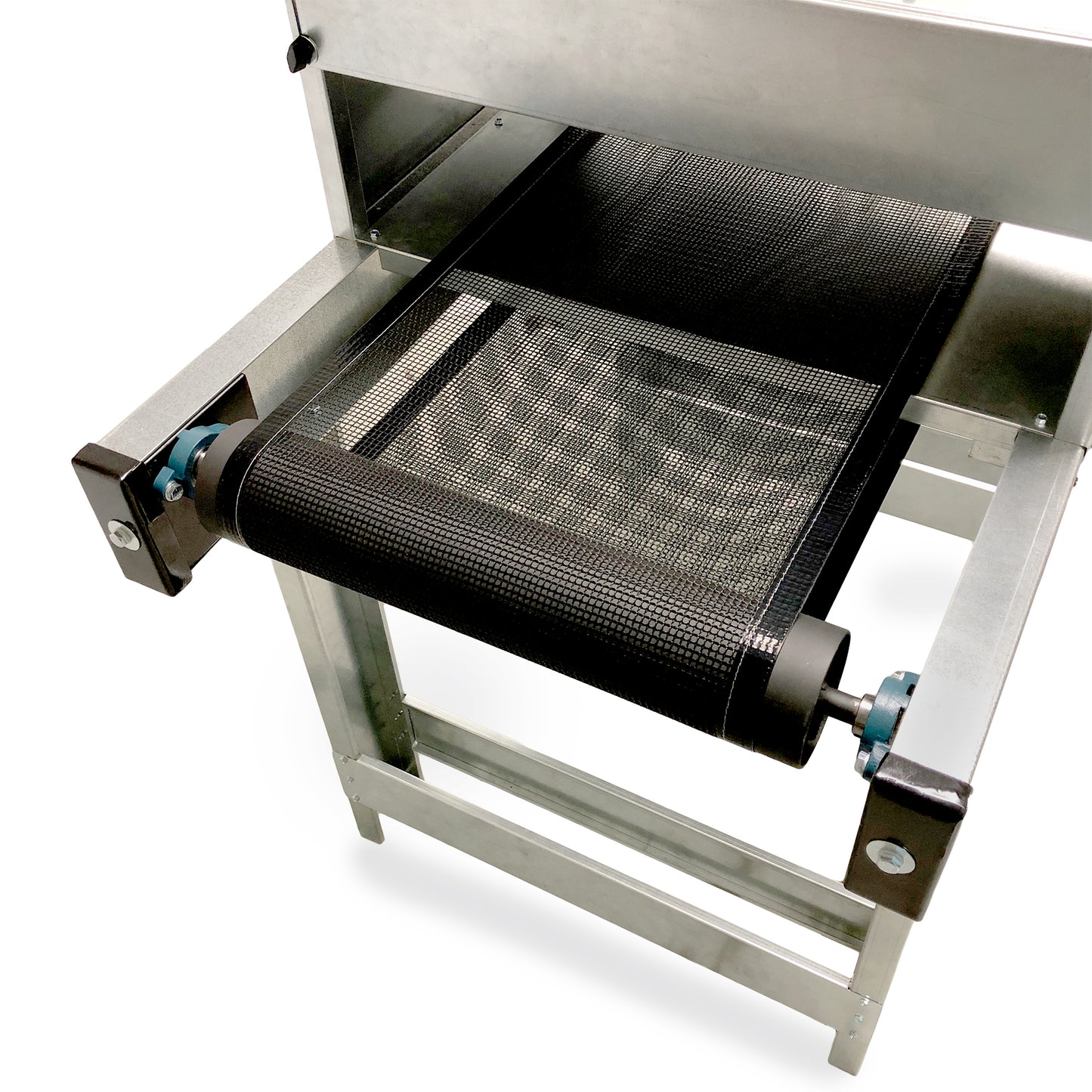
Description
The LWG Difference
Features
Specifications Table
| FEATURE | Specification |
|---|---|
| Estimated Max. Production | 144* |
| Estimated Overall Length | 4' |
| Estimated Overall Width | 28" |
| Belt Width | 18" |
| Estimated Overall Height | 18" (Bench Model) / 44" (w/Floor Legs) |
| Heat Chamber Length | 20" |
| In-Feed | 18" |
| Out-Feed | 18" |
| Heat Panels | 1 |
| Max. Heater Wattage | 1800 / 6000 (18" x 24" Option) |
| Heater Size | 16" x 16" / 18" x 24" (Optional) |
| AMPS: 120, 2 Wires + Ground | 16 |
| Estimated Crate Weight (lbs) | 325 |
| Estimated Crate Size (W x L x H) | 44" x 54" x 35" |
Comparison Table
| FEATURE | Lawson Kick-Start Dryer | Standard DIY / Overseas Tabletop Dryers |
|---|---|---|
| Electrical Setup | Standard 120V plug-and-play design requires no special electrician wiring | Often requires custom 220V single-phase modifications or improper plug wiring |
| Build Quality & Upgrades | Handcrafted in the USA with Lawson's Trade-In, Trade-Up protection | Thin sheet metal construction with zero trade-in value when you outgrow capacity |
| Assembly | Ships 100% fully assembled and ready to print out of the box | Requires hours of manual assembly, wiring setup, and belt alignment |
| Factory Support | Direct US engineering, stocked domestic replacement parts, and technician service | Unbranded overseas imports with no domestic technical support or spare parts |